How to keep freeze-dried fruit crisp in a shared office jar
Moisture is the main reason freeze-dried fruit loses its crisp texture in a jar.
On this page
If you want freeze-dried fruit to stay crisp in a shared office jar, the main job is to keep moisture exposure low. The fruit is dry and porous, so every time the lid comes off it can pull in humidity from the room. In a workplace, that usually means repeated opening, warm kitchens, steam from drinks, and people topping up the jar before the older pieces are finished.
For keeping freeze dried fruit crisp in an office snack jar, the most reliable approach is simple. Use a jar with a close-fitting lid, choose a size that matches a few days of use rather than a month of use, refill in small measured amounts, and keep the jar away from kettles, sinks and damp utensils. Texture change is the issue most people notice first. That is different from wider food-safety questions, which still depend on the packet instructions and sensible shared-food hygiene.
Why office jars make freeze-dried fruit go soft
Freeze-dried fruit stays crisp because very little water is left in it. That crispness is fragile. Once the fruit is exposed to air, it starts taking up moisture again. In a home cupboard, that may happen slowly if the pack is resealed well. In an office, it often happens much faster because the jar is opened many times a day, sometimes left open while people chat, and often kept in a kitchen area where the air is more humid.
The problem is not that the fruit has suddenly become a different product. It is that the texture changes as moisture moves back into the pieces. A crisp strawberry slice can become leathery. Raspberry pieces can lose their light crunch and turn slightly chewy. Powders clump for the same reason. If you have ever compared freeze-dried or dehydrated fruit for everyday snacking, that difference in texture makes sense. Freeze-dried ingredients are especially quick to react to moisture.
A shared jar also creates more headspace exchange than the original packet. Every opening swaps the dry air inside the jar for whatever the room is like at that moment. Near a kettle, microwave, dishwasher or sink, that can be enough to soften the fruit well before the packet would have done if it had stayed sealed.
It helps to separate texture from safety. Softening does not automatically mean the fruit is unsafe. It usually means it has absorbed enough moisture to lose its crisp bite. Food safety is a broader question, and the right starting point is still the manufacturer’s storage wording and general hygiene. The Food Standards Agency advises consumers to follow storage instructions on food packaging and to handle shared food sensibly Food Standards Agency. In practice, for office jars, that means two separate checks. First, has the fruit gone soft because of moisture exposure? Second, has the shared setup introduced avoidable hygiene problems, such as damp scoops, dirty hands or cross-contact with other foods?
Choose the right jar and fill level
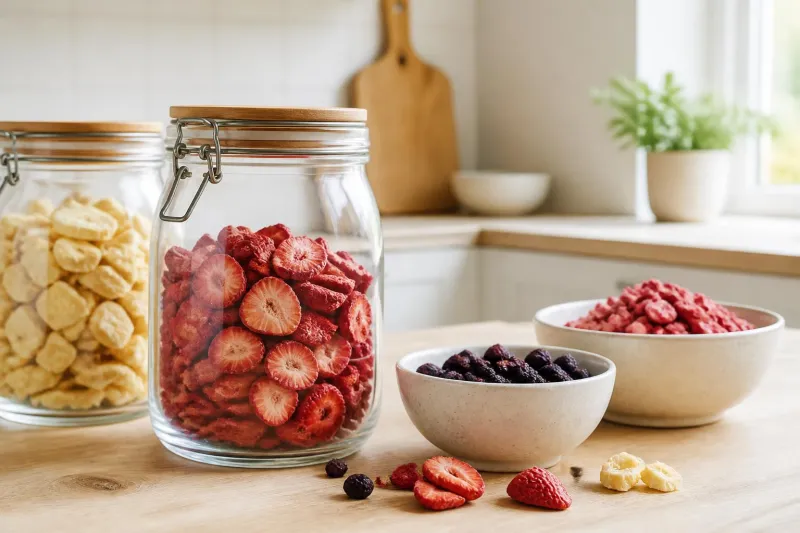
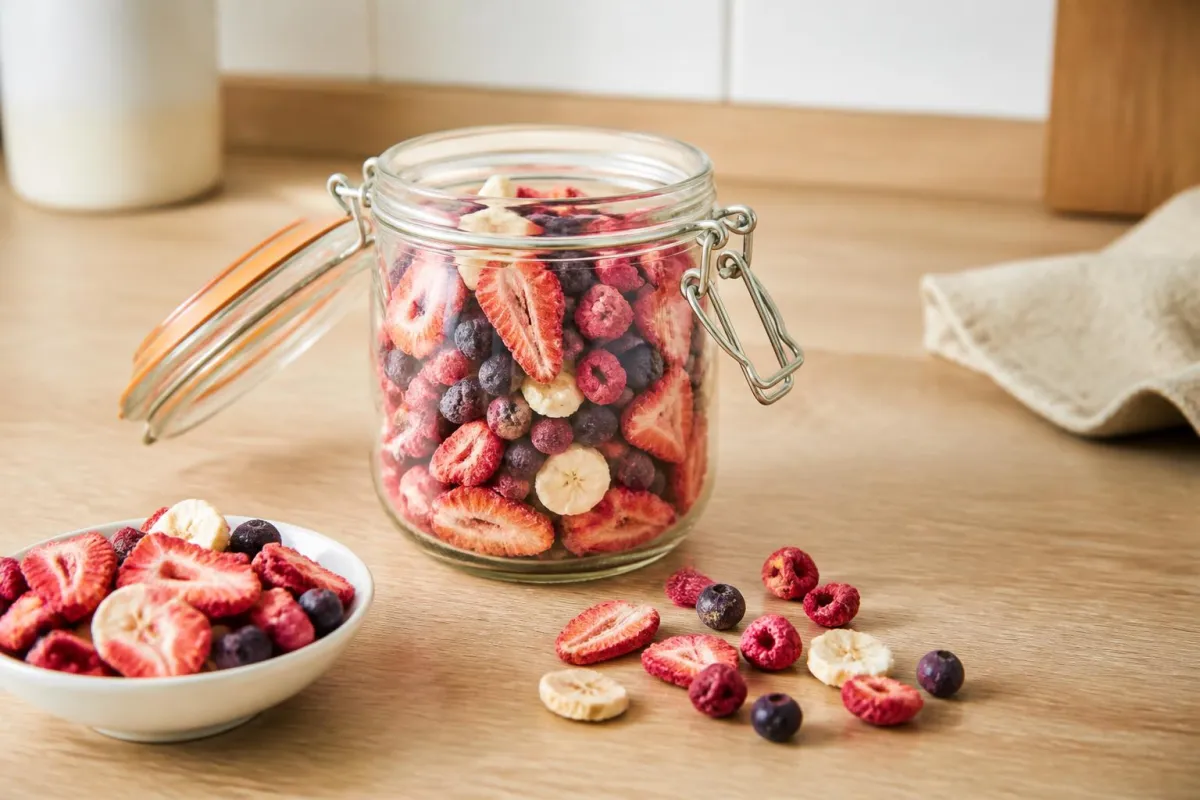
Jar choice matters more than people expect. A decorative wide-mouth jar with a loose wooden lid may look tidy on a counter, but it is often poor at keeping crisp texture. For office use, we would choose a rigid food-safe jar with a lid that closes firmly and consistently. A screw-top lid or a clip-top lid with an intact sealing ring is usually better than a lid that simply rests on top.
Size matters too. A very large jar creates a lot of headspace, and that means more air sitting above the fruit between openings. It also encourages overfilling for appearance. For crispness, a medium jar that holds only what the office will use in a short period is usually better than one oversized display jar.
As a practical example, if a team tends to eat around 80 to 120 grams over two or three working days, use a jar sized for roughly that amount rather than filling a multi-litre container. The exact amount must be checked against the actual packet and your workplace habits, but the principle is consistent. Fill for short turnover, not for visual abundance.
The fill level affects texture in two ways. If the jar is nearly empty, there is a lot of air relative to the amount of fruit, and each opening has a bigger effect. If the jar is packed too full, people crush the fruit while reaching in, creating more broken surfaces that soften quickly. A sensible middle ground is to fill the jar enough that the fruit is easy to take without crushing, while avoiding a large empty space above it.
It is also worth thinking about opening width. A very wide opening makes it easier for people to reach in by hand, which is not ideal for either hygiene or texture. A slightly narrower opening encourages use of a dry spoon or scoop and reduces how much room air enters at once.
If you are deciding between leaving fruit in its original packet or decanting it, the original packet often has the advantage of being designed for storage, especially if it is foil-lined and resealable. If you do decant for convenience, keep the rest in the packet, sealed as directed, rather than emptying everything into the office jar at once. For a broader home-style overview, our first steps with freeze-dried fruit guide covers the basics without duplicating the office routine here.
Set up a refill routine that limits moisture
The best refill routine is one that stops the jar spending long periods half-open and stops new stock being poured on top of old stock indefinitely. Offices often do both without noticing.
A practical routine can be very simple.
Start with one master pack kept sealed according to its label, in a dry cupboard away from heat. Then use one smaller office jar as the serving jar. Refill the serving jar in measured amounts, rather than tipping in whatever is left from an open packet.
Here is an illustrative example. Say you have a 120 gram packet of freeze-dried strawberries for office use. On Monday morning, place 35 to 40 grams in the jar. Keep the rest in the original packet, resealed promptly. If the jar empties by Tuesday afternoon, add another 35 to 40 grams. If there is still a noticeable amount left by Wednesday, wait until it is nearly finished before topping up. This is not a fixed recommended portion. It is just an example of using small batches so the fruit in the jar turns over quickly.
That small-batch approach does three useful things. It reduces the time any one batch sits exposed to repeated opening. It limits the amount that can go soft at once. It also makes stock rotation straightforward, because you are less likely to bury older pieces under a fresh layer.
If you need a clearer rotation rule, use this one. Finish what is in the serving jar before adding more. If the jar needs cleaning, empty any remaining dry fruit into a clean temporary container, wash and dry the jar fully, then return the older fruit first and add fresh fruit only if needed. Do not pour fresh fruit into a jar that still has softened crumbs stuck to the sides.
Timing matters as well. Refill when the area is dry and calm, not while the kettle is boiling, the dishwasher is venting, or lunch prep is creating steam. If your office kitchen is busiest mid-morning, refill before that period or later in the afternoon.
If several people manage the snack area, label the routine inside a cupboard door. Keep it short. For example:
- Refill in small amounts only
- Keep the lid closed between uses
- Use a dry scoop
- Finish older fruit before adding more
- Store reserve packs sealed in the cupboard
That sort of note is often enough to improve consistency without turning snack storage into a project.
What to avoid in a shared snack station
The quickest way to lose crisp texture is to put the jar in the wrong place. Avoid storing it beside a kettle, coffee machine, microwave vent, sink or dishwasher. Steam and splashes matter more than people think. Even if the lid is on most of the time, frequent exposure in a damp area will shorten the crisp window.
Avoid mixing freeze-dried fruit with moist or sticky snacks. Fresh grapes, cut fruit, marshmallows, chocolate-coated items and chewy sweets can all create a less suitable environment if they share a container or serving area too closely. Even if they do not touch directly, the habit of moving between foods with the same scoop or hand can transfer moisture and residue.
Utensils are another weak point. A damp spoon from tea, a scoop that has been washed but not dried properly, or fingers just used to peel a satsuma can all soften the top layer quickly. In a shared office, we would use a dedicated dry scoop or spoon and keep it in a clean, dry holder beside the jar, not inside it if that traps residue or encourages people to handle both repeatedly.
Another habit to avoid is leaving the lid off during meetings or break times. People sometimes open the jar and leave it standing while others help themselves. That gives the fruit prolonged exposure to room humidity. Better to open, serve, and close again straight away.
Cross-contact matters too, especially if colleagues rely on label information for allergens. The Food Standards Agency’s consumer guidance explains why ingredient and allergen information should be checked carefully and not guessed from appearance or habit Food Standards Agency. In a shared snack station, avoid using the same scoop across foods with different allergen profiles, and do not decant into an unlabelled jar if that removes important packet information.
One more point that often gets missed is crumbs. Broken freeze-dried fruit dust absorbs moisture quickly. If the bottom of the jar is full of powder and fragments, the whole jar can seem stale sooner. Empty, clean and dry the jar regularly rather than endlessly topping up over old crumbs.
How to check labels and storage instructions
The packet is still the main authority for that specific product. Before you set up an office jar, read the storage wording on the actual pack. Look for instructions such as store in a cool, dry place, keep sealed after opening, or use within a stated period once opened. Follow that wording first, because it applies to the product in your hand. General storage advice should not override it.
Check whether the pack says anything about transferring to an airtight container after opening. Some do, some do not. If it does not mention decanting, that does not automatically mean it is unsuitable, but it does mean you should be cautious about moving it into a jar that seals less well than the original packaging.
Allergen information needs the same care. If the office jar is decanted and the packet is thrown away, people lose access to ingredients and allergen wording. Keep the packet until the jar is empty, or place a copy of the label details nearby. This matters even when the fruit itself seems simple, because shared facilities and manufacturing statements can differ by product.
Nutrition panels also need a careful read. The NHS explains that nutrition information may be given per 100g and sometimes per portion, and those are not the same basis for comparison NHS. For freeze-dried fruit, this is especially relevant because the product is light, and a small handful may weigh fewer grams than people assume. If one packet lists values per 100g and another lists values per portion, compare like with like before drawing conclusions.
That is also why we avoid guessing at standard serving sizes. One brand’s suggested portion may differ from another’s, and some packets may not give a portion at all. If you are setting up a shared jar and want to note what has been added, write the actual amount used in grams from the packet you opened, rather than inventing a typical serving.
While this article is about storage and texture, readers often want broader context on labels and ingredient choices. Our piece on reading the label before choosing freeze-dried fruit is useful if you are comparing products for a cupboard or office setup.
For keeping freeze dried fruit crisp in an office snack jar, the routine is not complicated. Match the jar size to short-term use, keep the lid properly closed, refill in small dry batches, and keep the packet for storage and allergen details. If the fruit goes soft, that usually points to moisture exposure and handling habits first. Fix those, and a shared office jar becomes much more reliable.